Most aquaponics photos you see online are full of green leaves. That looks great, but it hides how the system actually works. Right now ours is between crops, so this is the perfect time to show you every part of it.
This system started outside in our greenhouse. Today it lives in the garage. Same idea, new home.
The Basic Loop
Aquaponics is a simple circle. Fish make waste. That waste feeds the plants. The plants clean the water. The clean water goes back to the fish. Nothing is thrown away.
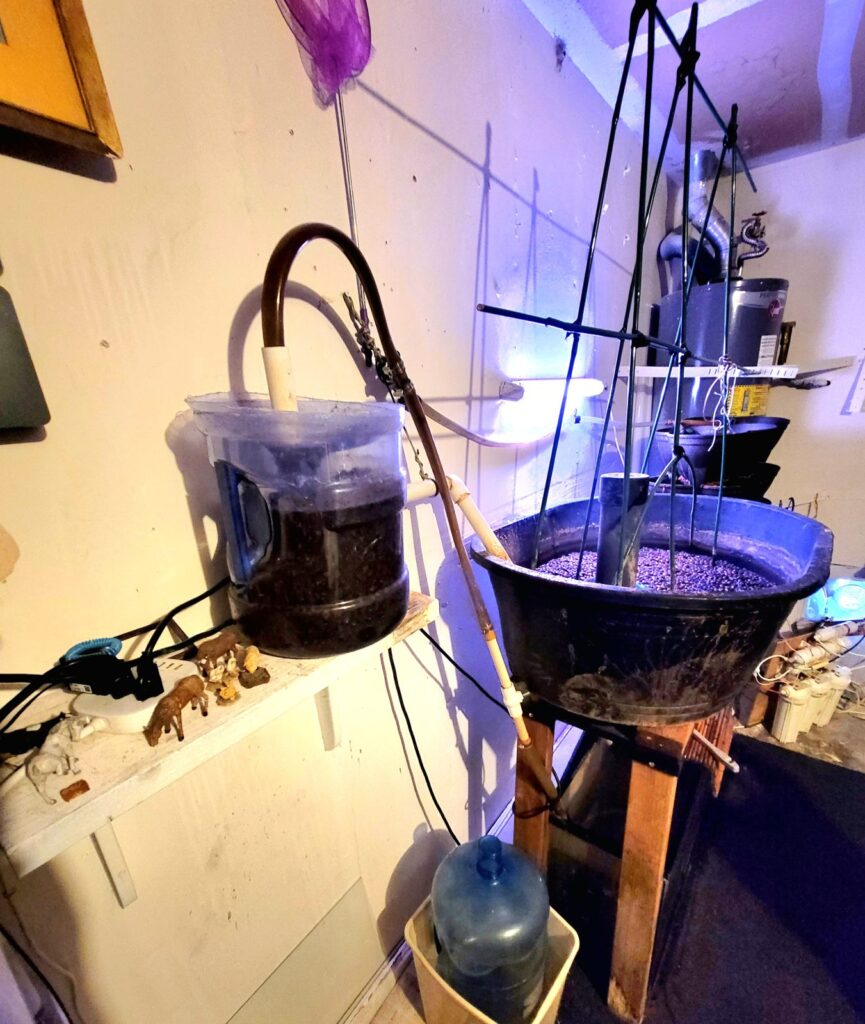
In our setup, a pump in the fish tank pushes water up through a pre-filter and into the grow bed. The pre-filter catches the solid bits so they don’t clog the grow bed.
The Ebb-and-Flow Grow Bed and the Siphon
The big black tub is the grow bed. It’s filled with clay balls instead of dirt. The plant roots grip the clay balls, and the clay gives helpful bacteria a place to live.
See the pipe standing up in the middle? That’s the siphon. Water slowly fills the bed. When it reaches the top of the pipe, the siphon kicks in and drains the whole bed at once. Then it fills again. That’s the “ebb and flow.” The roots get water, then air, then water, over and over. No timers. No electronics. Just physics.
And yes, the little farm crew on the shelf keeps an eye on the pre-filter.
Back to the Fish
When the bed drains, the water pours right back into the fish tank. You can hear it, which is a nice way to know the system is working.
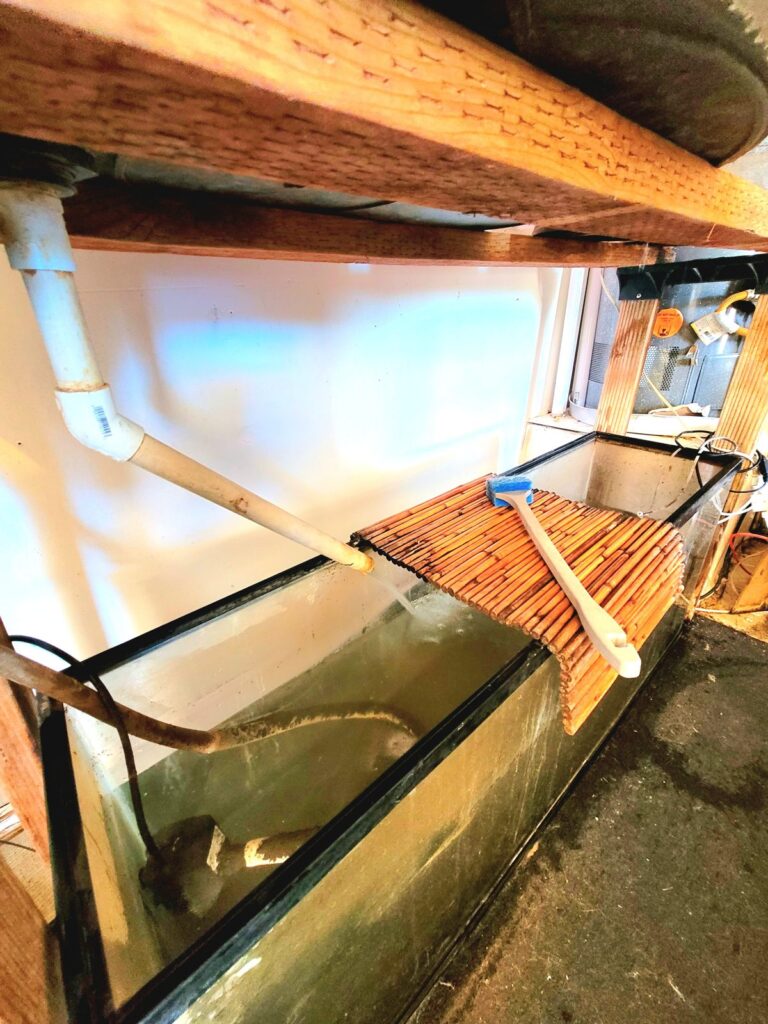
Right now the tank only has a few small cleaner catfish. They keep things tidy while the system runs. Food fish come later.
The Vertical Towers
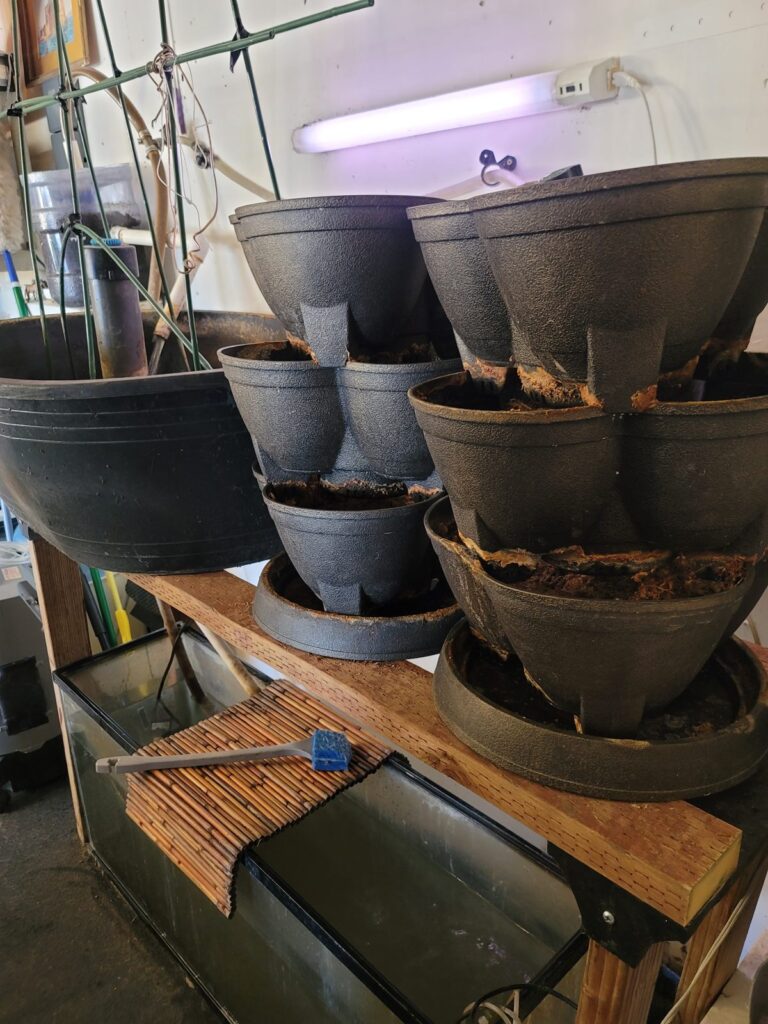
The towers get water from the same loop. A tube runs over from the grow bed to drip lines in the vertical planters. I poked holes in the bottom trays, so the extra water drips straight back down into the fish tank. Every drop gets recycled.
Above the tank are stacked vertical planters. Here’s how I grow:
- Start seeds indoors in sphagnum moss.
- Move the seedlings into the vertical towers next to the grow bed.
- Transplant the strongest ones into the clay-ball grow bed.
How It Started: From a Fish Tank in the House to a Backyard Greenhouse
This all began in 2016 with a small aquarium in the house. I set a grow tray on top and planted basil, chard, and parsley. The fish fed the plants, and the plants cleaned the water.
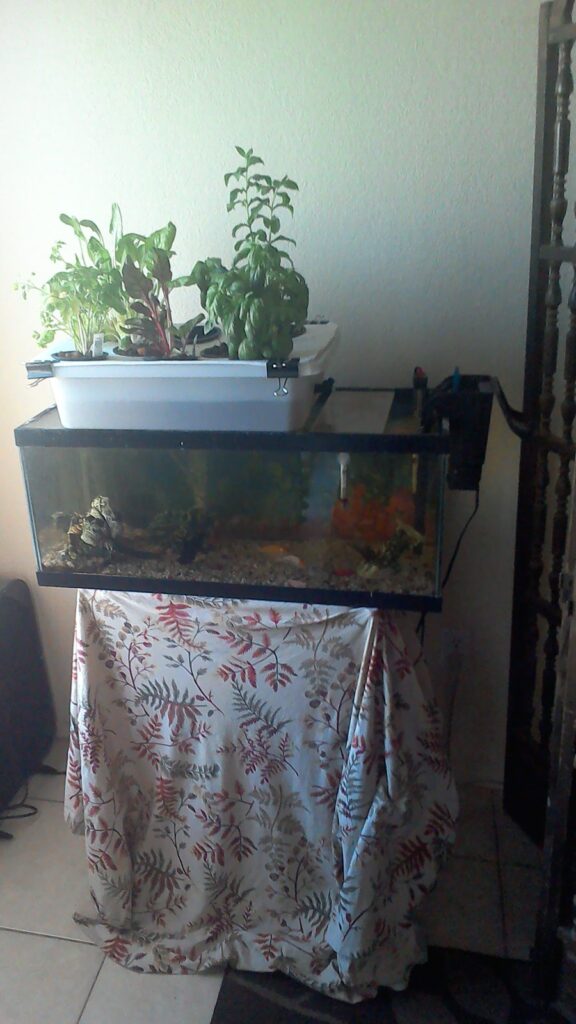
That little system taught me something I didn’t expect. My fish spawned, and the babies got carried up into the grow tray with the water. They couldn’t get back down to the tank, which turned out to be a good thing. In the tank, the bigger fish would have eaten them. Up top, they were safe, and I ended up raising more fish that way.
That spring, the frame for a backyard greenhouse went up.
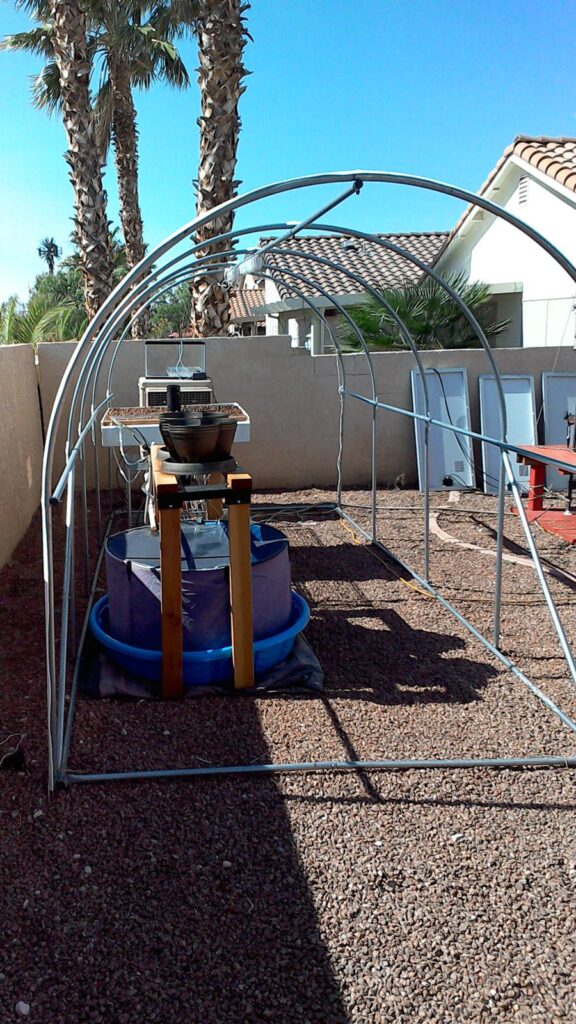
By August, the first big grow bed was planted: cucumbers, peppers, chard, lettuce, and even stevia, all growing in clay balls.
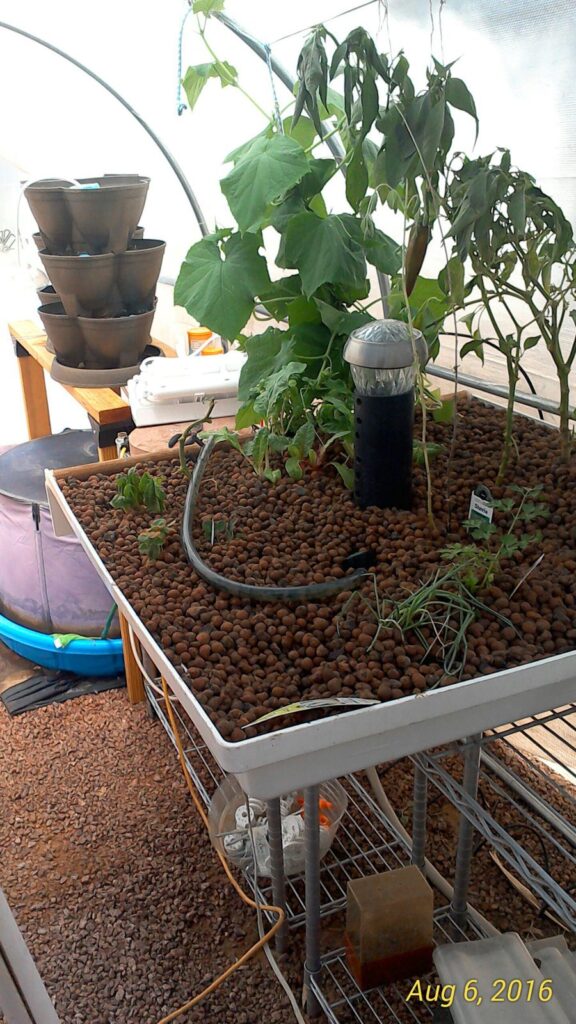
Over the next few years the greenhouse filled up. Tomatoes climbed the hoops. Growing in Las Vegas means fighting the heat, so we covered it all in shade cloth.
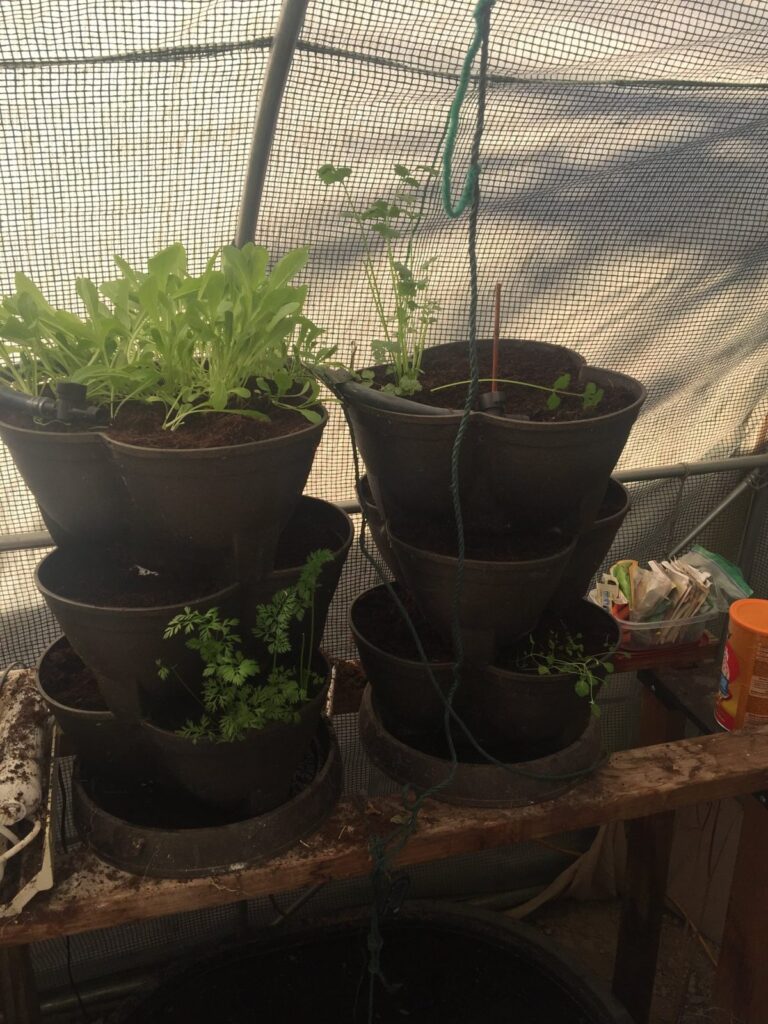
Another season it was cabbage, with more plants growing in buckets on the shelf below.
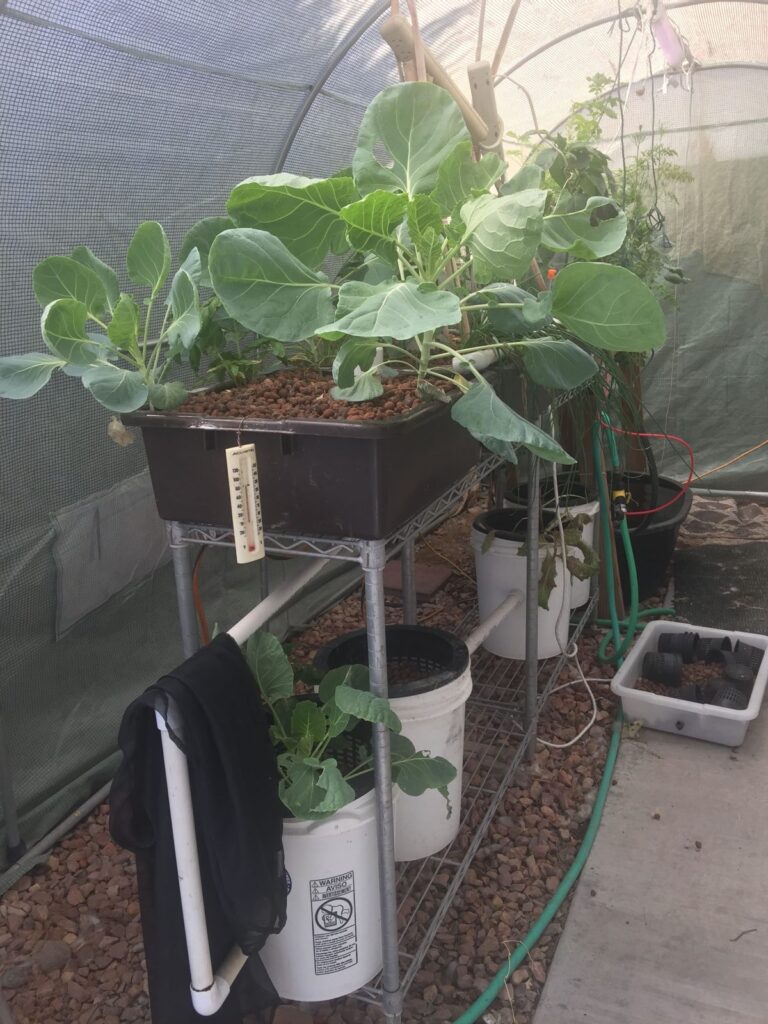
And those same stacked planters you saw above? Here they are full of lettuce, carrots, and herbs.
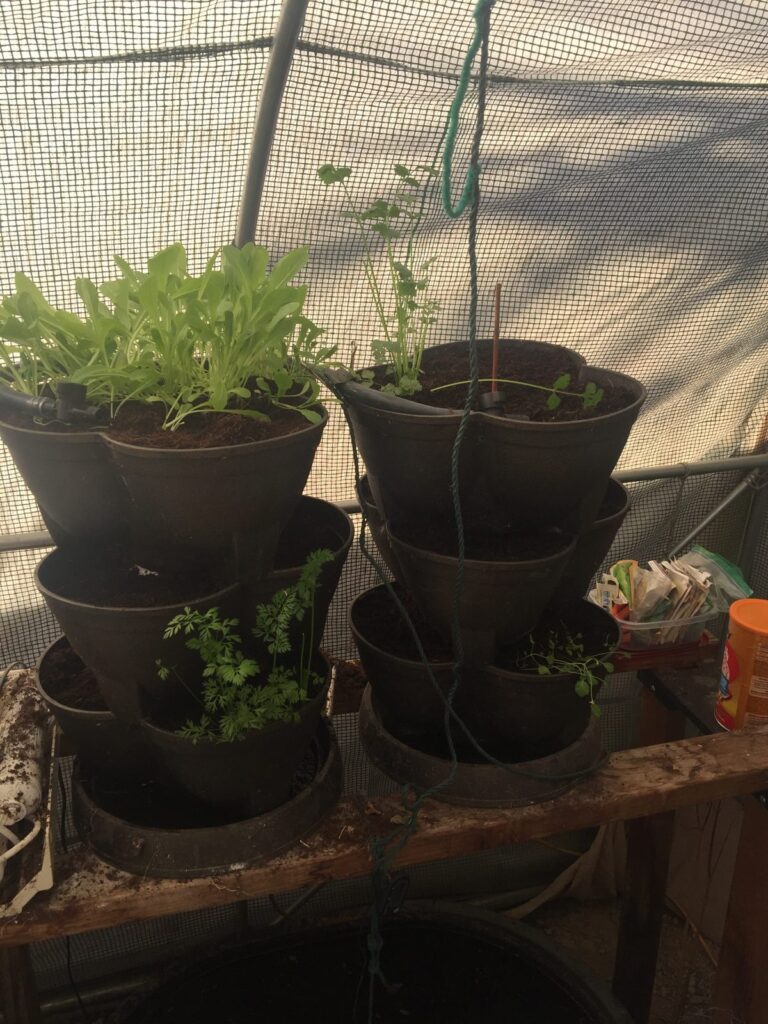
Now the whole system lives in the garage, out of the worst of the summer heat. Same idea, new home.
Why This Works for Seniors
Everything sits at table height. There’s no kneeling, no digging, and no weeding. If your back and knees aren’t what they used to be, this is gardening you can keep doing for years.
What’s Next
The grow bed needs about six more inches of clay balls to hold the plants up. Then come the seeds, and then the fish. I’ll post updates as it fills back in, so you can see the before and after.
Want to build your own? Book One of The Resilience Trilogy: What My Grandkids Need to Know walks you through it step by step. And here’s the gear I actually use: My Aquaponics Gear.