Chicken breast is easy to ruin. Leave it in the pan one minute too long and it turns dry and stringy. Sous vide fixed that for me for good. It’s the only way I cook chicken breast now, and the only way I actually like it.
What “sous vide” means
Sous vide is French for “under vacuum.” You seal the food and cook it in water held at one exact temperature. The meat can never get hotter than the water, so it can’t overcook. Leave it an extra half hour and it comes out the same: tender and juicy all the way through.
My setup
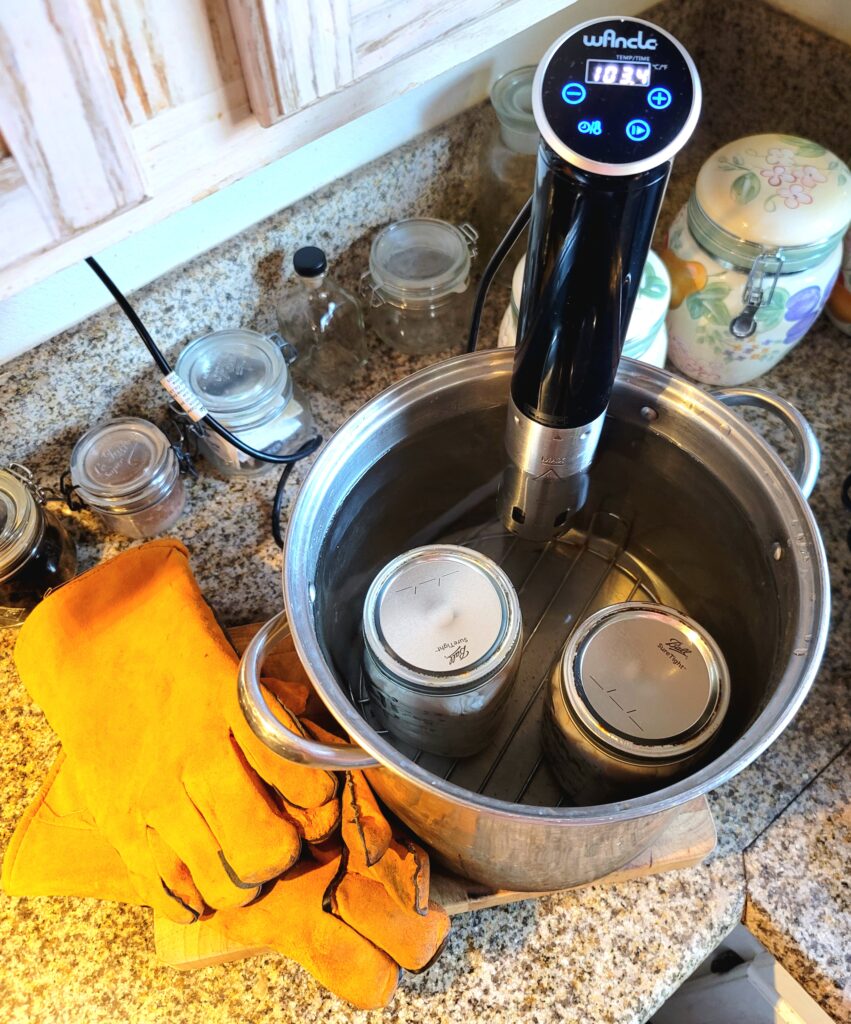
Nothing fancy. A big stockpot with a rack in the bottom, a Wancle 1100-watt sous vide cooker clipped to the side, and a round cover on top to hold in the heat. Instead of plastic bags, I pack the raw chicken right into canning jars. That rack matters. Without it, the jars rattle against the bottom of the pot and can crack.
How I do it
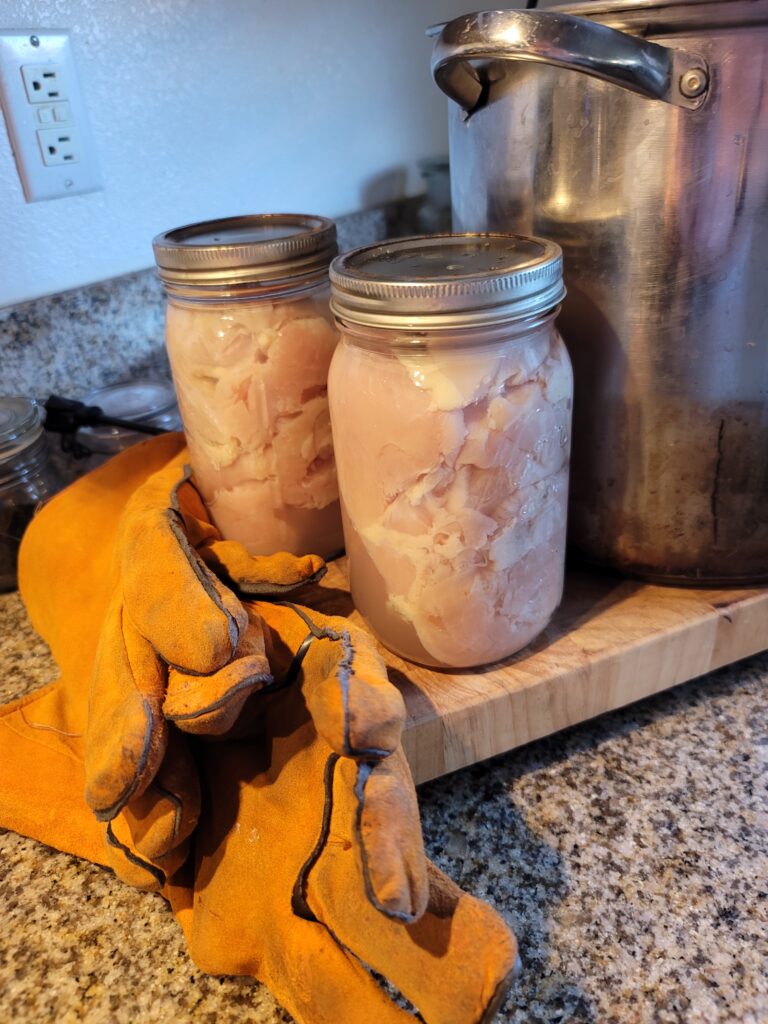
- Pack raw chicken breast into clean canning jars and put the lids on finger-tight.
- Set the jars on the rack and fill the pot until the water covers them.
- Set the cooker to 140°F (60°C) and let it go for about 3 hours.
- I cook 4 to 6 pounds at a time, so there’s always some ready in the fridge.
- Even at 140°F, the lids pull a little vacuum and seal down as the jars cool. With that seal, I find it keeps a little longer in the fridge. But the seal does not make the jars shelf-safe. They’re still fridge food. To make chicken shelf-ready, you have to pressure can it (more on that below).
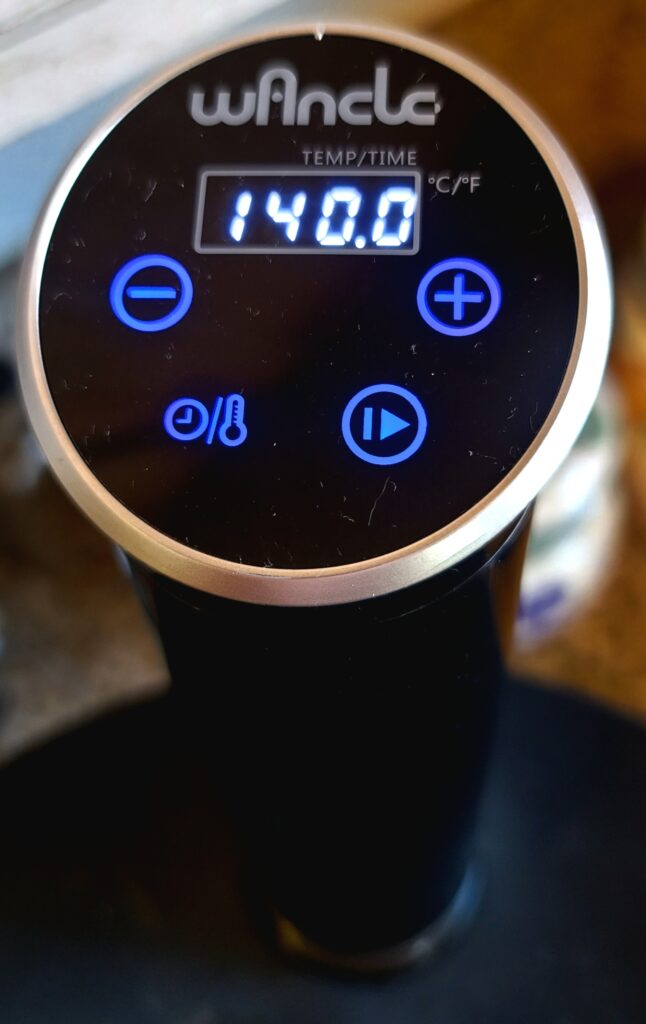
Is 140°F safe for chicken?
Yes. Food safety depends on temperature and time. 165°F kills germs almost instantly. 140°F does the same job, but it takes longer. Once the center of the chicken reaches 140°F, it needs about half an hour to be just as safe. Three hours gives me plenty of room to spare.
What I do with a batch
- A couple of pounds go in the fridge for our own cooking during the week, shared with family.
- My dog gets his share too. I cut it up and mix it with quinoa, French-style green beans, and sometimes a little crushed eggshell for calcium. This is what works for my old guy’s sensitive stomach. Check with your vet before changing your dog’s diet.
- The rest gets pressure canned, covered in my homemade bone broth: 75 minutes for pints, 90 for quarts. Use a pressure canner only, never a water bath, and set the pressure for your altitude.
That way I’ve got tender chicken on the shelf that’s ready to eat, with no freezer needed. It’s exactly the kind of cooking I write about in Book Two of The Resilience Trilogy.
Want to see the canner and tools I use? Check out Canning Gear: What I Actually Use.