Can a solar powered smoker handle a Thanksgiving turkey? The day before Thanksgiving, I tried an experiment: could I smoke a whole turkey with no power from the grid?
The setup
- Traeger pellet smoker
- EcoFlow Delta 3 Plus battery (1,024 watt-hours) (Amazon currently lists the regular Delta 3. It has the same 1,024 Wh capacity, but the Plus takes more solar input, so compare specs before you buy.)
- 400 watts of Renogy solar panels (four 100-watt panels) to charge it
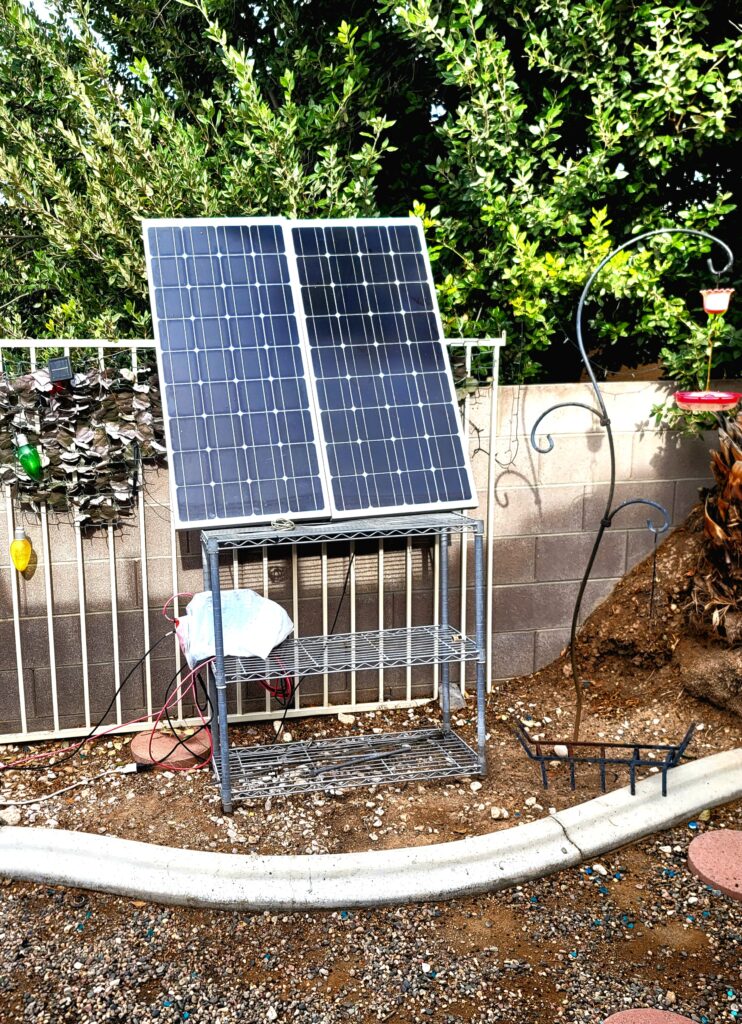
How it went
The 13-pound turkey went on around 10 AM and came off around 2 PM, about four hours. The battery started full and used about a third of its charge, roughly 340 watt-hours.
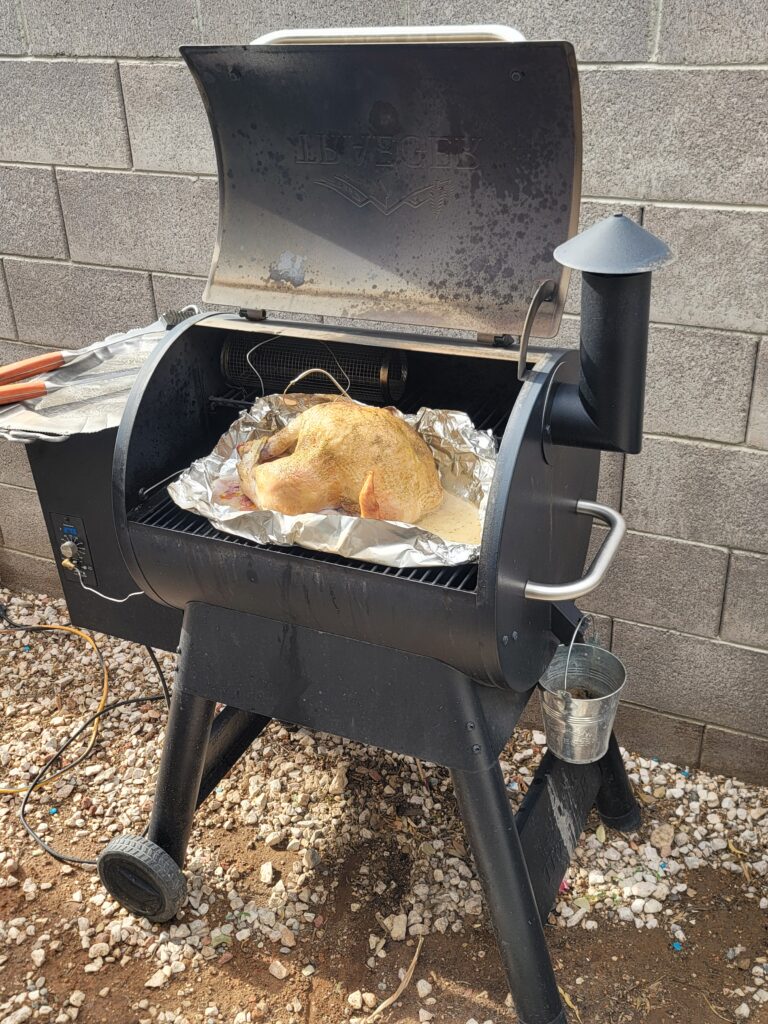
Here’s what surprises most people: the electricity doesn’t cook the turkey. The wood pellets make the heat. The power runs only the fan, the auger that feeds the pellets, and the controller. The smoker draws the most power, around 200 watts, for the first few minutes while the igniter lights the pellets. After that it settles to about 50–75 watts.
The result
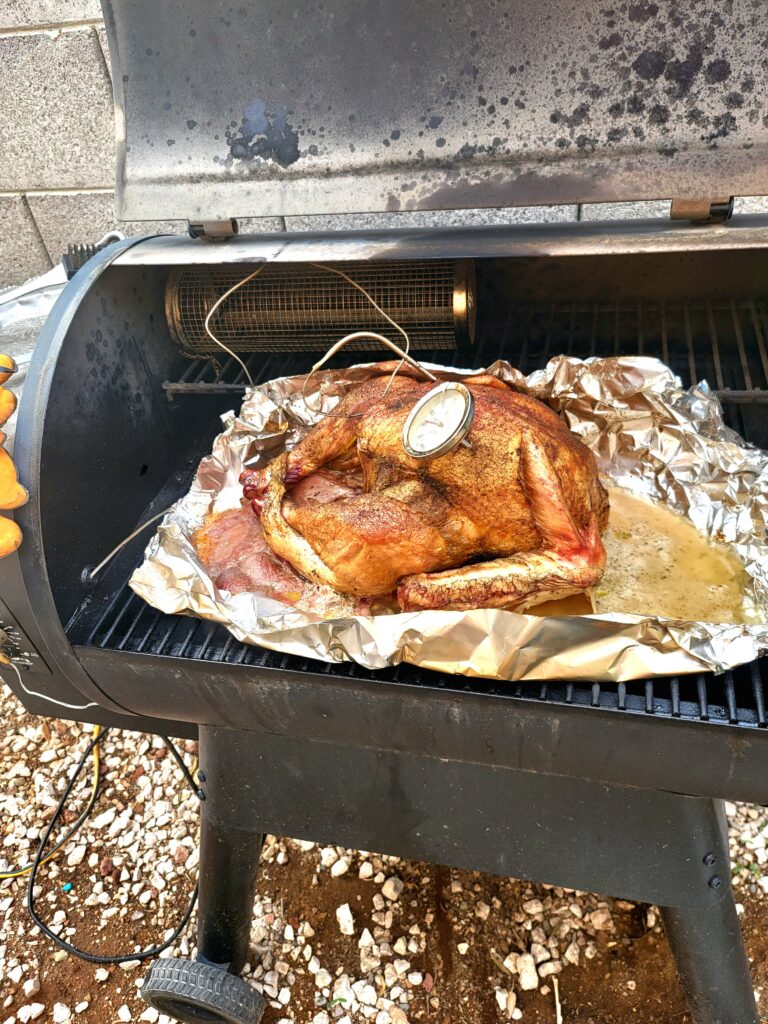
It came out perfect. It was moist and smoky, and it was done in time for lunch. We’re still roasting a second turkey in the oven tomorrow, but now I know the smoker works when the power is out.
Why this matters
If the grid goes down during a holiday, a storm, or a heat wave, a pellet smoker and a mid-size battery can still cook a real meal. A third of a battery for a whole turkey leaves plenty for lights, phones, and the fridge. With solar panels, you can refill it the next day.
Tips if you try it
- Charge the battery to full the day before.
- Expect the most power draw at startup. That’s normal.
- Use a meat thermometer. The turkey is done at 165°F in the thickest part of the breast and thigh.
- Keep the battery in the shade and away from the smoker’s heat.
- Buying panels now? I’d go with N-type panels, Renogy or another brand. They hold up better in heat and low light. Look for “half-cut cells” too, which handle partial shade better.
The sourdough in the background? That’s becoming tomorrow’s stuffing.